
How Technology Is Changing Traditional Career Path
Technology has transformed nearly every aspect of modern life, and the world of work is no exception. Careers that once followed predictable paths are evolving rapidly due to advancements in automation, artificial intelligence, digital communication, and data-driven decision-making.
Traditional professions such as teaching, healthcare, banking, manufacturing, and marketing are no longer operating the way they did a decade ago. New tools, platforms, and technologies are reshaping job roles, creating new opportunities, and changing the skills required for success.
For students, parents, and professionals, understanding how technology is influencing career paths is essential for making informed decisions and preparing for the future job market.
The Digital Transformation of Careers
Technology is not just creating new jobs; it is also transforming existing ones.
Today, professionals use:
- Artificial Intelligence (AI)
- Cloud Computing
- Data Analytics
- Automation Tools
- Digital Collaboration Platforms
- Virtual Reality (VR)
- Cybersecurity Systems
These technologies have become part of everyday work across industries.
As a result, traditional career paths are becoming more dynamic, flexible, and skill-focused.
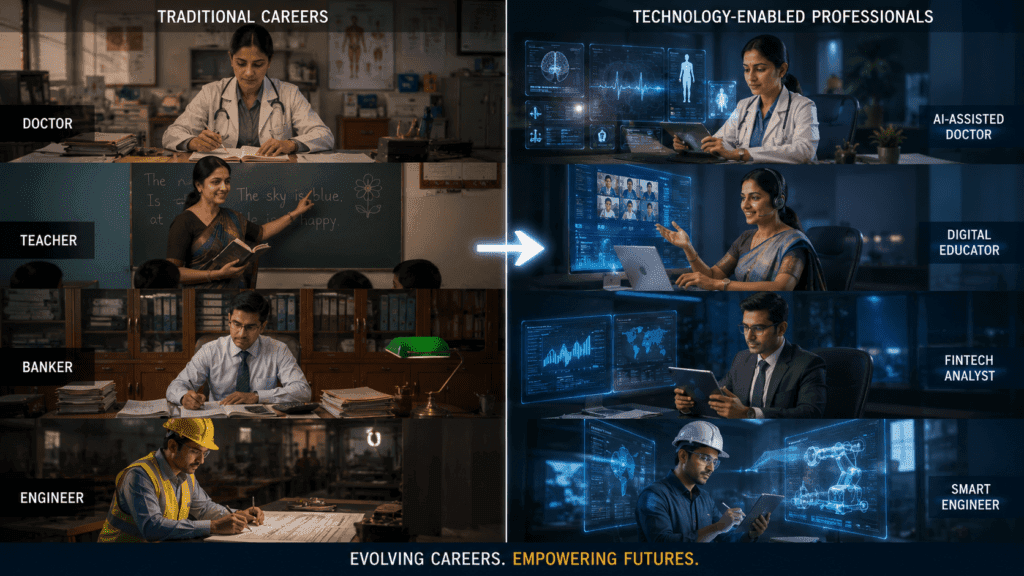
Same Careers, New Skills, Bigger Opportunities
How Technology Is Reshaping Traditional Careers
1. Healthcare Is Becoming More Technology-Driven
Healthcare has traditionally relied on face-to-face interactions and manual record keeping. Today, technology is improving patient care and medical processes.
Examples include:
- Telemedicine consultations
- Electronic health records
- AI-assisted diagnostics
- Wearable health monitoring devices
Doctors, nurses, and healthcare administrators now need digital literacy alongside medical expertise.
2. Education Is Expanding Beyond Classrooms
Teaching has evolved significantly through online learning platforms and digital tools.
Modern educators use:
- Virtual classrooms
- Learning management systems
- Interactive educational apps
- AI-powered learning tools
Students can now access high-quality education from anywhere in the world, creating new opportunities for both learners and educators.
3. Banking and Finance Are Going Digital
Traditional banking roles have changed with the rise of digital financial services.
Technology has introduced:
- Online banking
- Mobile payment systems
- Financial technology (FinTech)
- Automated customer support
Professionals in finance increasingly require skills in data analysis, cybersecurity, and digital systems.
4. Manufacturing Is Becoming Smarter
Factories today rely on automation, robotics, and smart systems to improve efficiency.
Modern manufacturing includes:
- Industrial robots
- Internet of Things (IoT) devices
- Predictive maintenance systems
- Automated quality control
Workers now need technical and analytical skills in addition to traditional operational knowledge
5. Marketing Has Become Data-Driven
Traditional advertising methods such as print and television remain important, but digital marketing now plays a major role.
Today’s marketers use:
- Social media platforms
- Search engine optimization (SEO)
- Content marketing
- Marketing automation software
- Customer analytics
Creativity remains important, but digital skills have become equally valuable.
The Rise of New Career Opportunities
Technology has created entirely new professions that barely existed a few years ago.
Examples include:
- Data Scientist
- AI Specialist
- Cybersecurity Analyst
- Cloud Engineer
- UX/UI Designer
- Digital Marketing Strategist
- Content Creator
- Machine Learning Engineer
These careers continue to grow as organizations embrace digital transformation.
Automation: Threat or Opportunity?
Automation often raises concerns about job displacement. While some repetitive tasks are being automated, technology is also creating new opportunities.
Automation can:
- Reduce repetitive work
- Improve productivity
- Increase efficiency
- Allow employees to focus on higher-value tasks
The key challenge is adapting through continuous learning and skill development.
The Growing Importance of Soft Skills
As technology handles routine tasks, human-centered skills become more valuable.
Important soft skills include:
- Communication
- Creativity
- Leadership
- Emotional intelligence
- Critical thinking
- Problem-solving
Employers increasingly seek professionals who can combine technical knowledge with strong interpersonal abilities.
Remote Work Is Changing Career Expectations
Technology has made remote and hybrid work models possible.
Benefits include:
- Greater flexibility
- Access to global opportunities
- Improved work-life balance
- Reduced commuting time
Many traditional office-based careers now offer location-independent work options.
Lifelong Learning Is Becoming Essential
In the past, earning a degree often provided long-term career stability. Today, technology evolves so quickly that professionals must continuously update their skills.
Ways to stay current include:
- Online courses
- Professional certifications
- Industry workshops
- Webinars
- Self-paced learning platforms
Continuous learning is becoming a career necessity rather than an option.
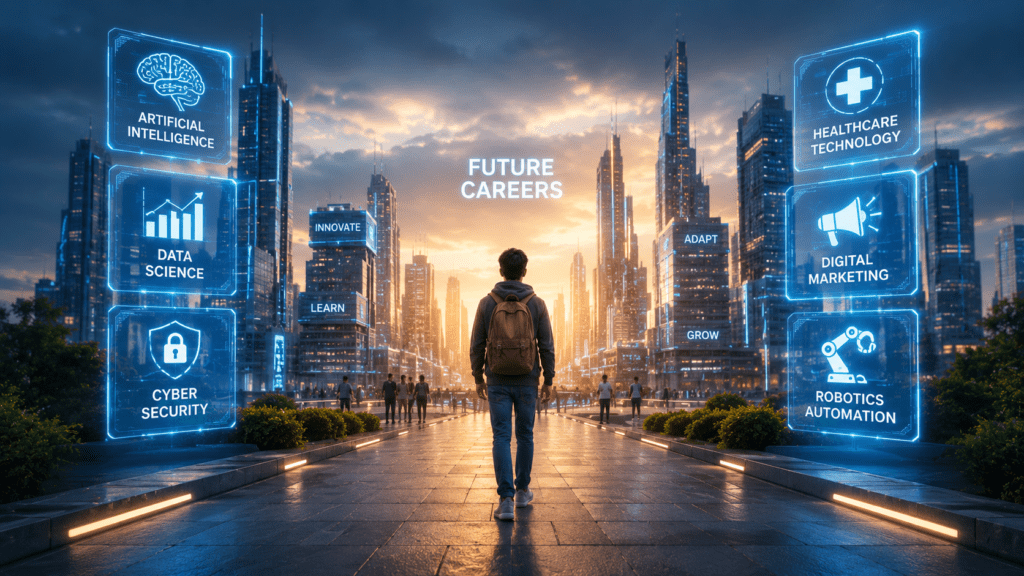
Preparing Today for Tomorrow’s Careers
How Students Can Prepare for Technology-Driven Careers
1. Develop Digital Skills
Basic digital literacy is essential across industries.
Important areas include:
- Data analysis
- Coding fundamentals
- Digital communication
- Productivity software
2. Build Adaptability
Career paths may change multiple times during a person’s working life.
Adaptability helps students:
- Embrace change
- Learn new technologies
- Transition between roles
3. Focus on Problem-Solving
Technology can automate tasks but cannot fully replace human creativity and critical thinking.
Students should develop:
- Analytical thinking
- Decision-making skills
- Innovation mindset
4. Gain Practical Experience
Internships, projects, and online portfolios help students apply knowledge in real-world situations.
Practical experience often provides a competitive advantage.
Role of Parents in the Digital Age
Parents can support their children by:
- Staying informed about emerging careers
- Encouraging digital skill development
- Supporting lifelong learning
- Avoiding outdated career assumptions
Understanding modern career trends helps families make better decisions
Common Myths About Technology and Careers
Myth 1: Technology Will Eliminate All Jobs
Technology changes jobs more often than it eliminates them.
Myth 2: Only Technology Professionals Need Digital Skills
Digital skills are now important in nearly every profession.
Myth 3: Traditional Careers Are Disappearing
Traditional careers still exist but are evolving with technology.
The Future of Work
The future workplace will likely combine:
- Human creativity
- Artificial intelligence
- Automation
- Global collaboration
Professionals who embrace technology and continuous learning will be better positioned for success.