
How to Align Personality Type with Career Choice
Choosing a career is one of the most important decisions in life, yet many people make this choice based on external pressure, trends, or limited information. One of the most effective ways to make a fulfilling career decision is by aligning it with your personality type.
Your personality influences how you think, communicate, solve problems, and interact with others. When your career matches your personality, work feels more natural, enjoyable, and sustainable in the long run.
What Does Personality-Based Career Alignment Mean?
Personality-based career alignment refers to choosing a profession that fits your natural traits, preferences, and behavioral patterns. Instead of forcing yourself into a role that feels uncomfortable, you select a path where your strengths can shine.
This approach helps individuals:
- Perform better at work
- Experience less stress
- Build stronger professional relationships
- Achieve long-term satisfaction
Why Personality Matters in Career Choice
Many people focus only on salary, job security, or societal status while choosing a career. While these factors are important, ignoring personality can lead to dissatisfaction and burnout.
For example, a highly creative person may struggle in a repetitive, rule-based job, while a detail-oriented individual may feel overwhelmed in an unstructured environment.
Key Insight: When personality and career align, productivity and happiness increase significantly.

Choose What Fits You, Not What Follows Others
Understanding Different Personality Types
There are various frameworks to understand personality. One widely used model is based on preferences such as:
1. Introvert vs Extrovert
- Introverts prefer quiet environments and independent work
- Extroverts enjoy social interaction and teamwork
2. Thinking vs Feeling
- Thinking types focus on logic and analysis
- Feeling types prioritize emotions and relationships
3. Structured vs Flexible
- Structured individuals prefer planning and organization
- Flexible individuals enjoy adaptability and spontaneity
Understanding where you fall in these categories helps narrow down suitable career paths.
Steps to Align Personality with Career
1. Identify Your Personality Traits
Start by analyzing your strengths, preferences, and behavior patterns. Ask yourself:
- Do I enjoy working alone or in a team?
- Do I prefer routine or variety?
- Am I more analytical or creative?
You can also use personality assessments for deeper insights.
2. Match Traits with Work Environments
Different careers require different environments. For example:
- Creative individuals thrive in design, media, or marketing
- Analytical thinkers excel in finance, data science, or engineering
- Social personalities succeed in sales, teaching, or management
Choosing the right environment is as important as choosing the right role.
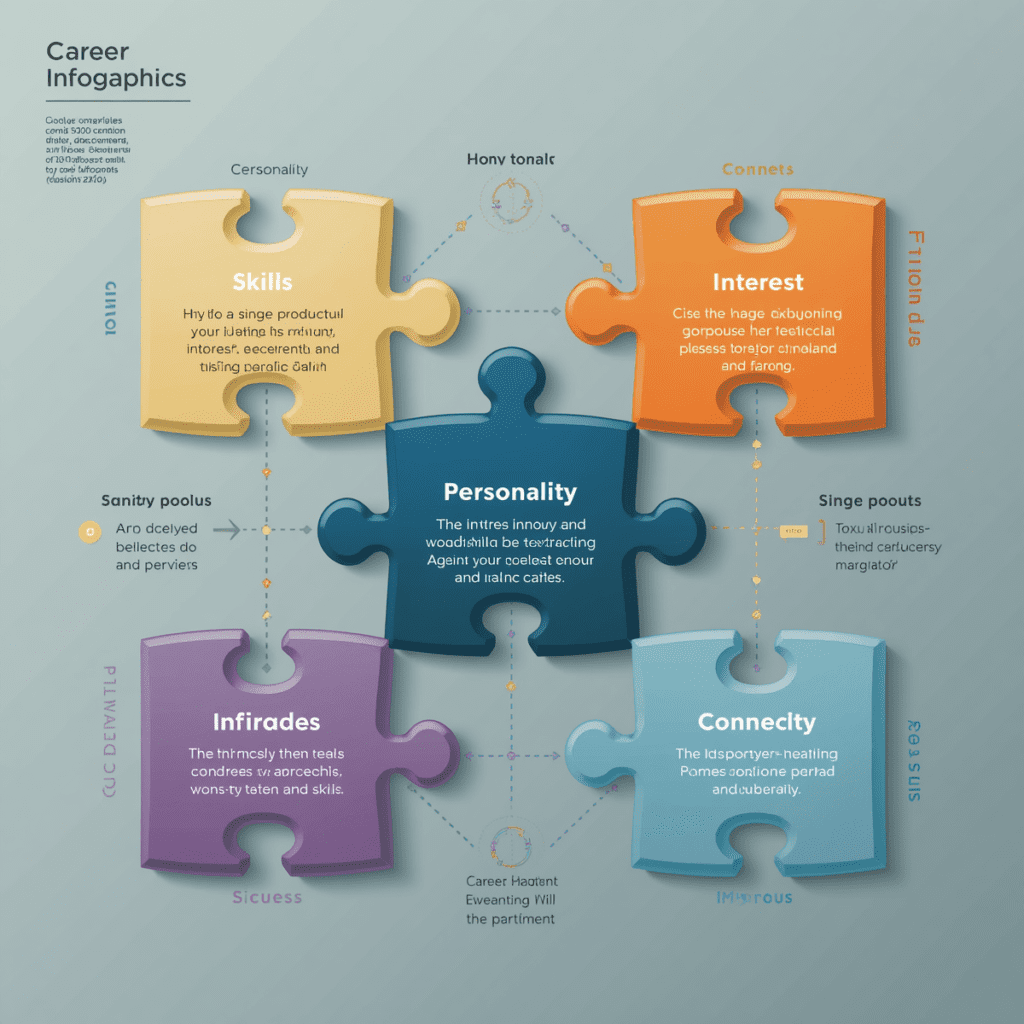
3. Consider Your Interests and Values
Personality alone is not enough. Your interests and values also play a crucial role.
For example:
- If you value helping others, careers in healthcare or counseling may suit you
- If you enjoy innovation, technology or entrepreneurship might be ideal
4. Explore Career Options Before Finalizing
Don’t rush into a decision. Try internships, part-time work, or online projects to understand what suits you best.
Real-world exposure provides clarity that theoretical knowledge cannot.
5. Seek Professional Guidance
Career counselors use scientific tools to assess personality and suggest suitable career paths. Their guidance can help avoid confusion and wrong decisions.
Examples of Personality-Career Matches
Creative Personalities
- Graphic Designer
- Content Creator
- Animator
- Marketing Specialist
Analytical Personalities
- Data Analyst
- Engineer
- Accountant
- Researcher
Social Personalities
- Teacher
- HR Professional
- Sales Executive
- Public Relations Manager
Detail-Oriented Personalities
- Auditor
- Quality Analyst
- Administrative Roles
- Project Manager
These are general examples, and individuals may fit into multiple categories.
Common Mistakes to Avoid
1. Following Trends Blindly
Choosing a career just because it is popular can lead to dissatisfaction if it doesn’t match your personality.
2. Ignoring Your Natural Strengths
Trying to fit into roles that go against your natural tendencies can cause stress and poor performance.
3. Overlooking Work Environment
Even if the role suits you, the wrong work environment can make it uncomfortable.
4. Not Updating Your Skills
Personality alignment works best when combined with relevant skills and continuous learning.
Benefits of Aligning Personality with Career
When your career matches your personality, you experience:
- Higher job satisfaction
- Better performance and productivity
- Reduced stress and burnout
- Stronger motivation and engagement
This alignment leads to both personal happiness and professional success.
Role of Parents and Mentors
Parents and mentors often influence career decisions. Instead of imposing choices, they should:
- Encourage self-discovery
- Support exploration of interests
- Avoid comparisons with others
- Provide guidance without pressure
A supportive environment helps individuals make confident decisions.