
Career Counselling vs Career Coaching: What Is the Difference?
In today’s competitive and ever-evolving world, choosing the right career path can feel confusing and overwhelming. Students, graduates, and even working professionals often seek expert guidance to make informed decisions. Two commonly used terms in this space are career counselling and career coaching.
Although they may sound similar, they serve different purposes and are designed for different stages of an individual’s career journey. Understanding the difference between these two approaches can help you choose the right kind of support for your needs.
Clarity vs Growth — Know the Difference
What Is Career Counselling?
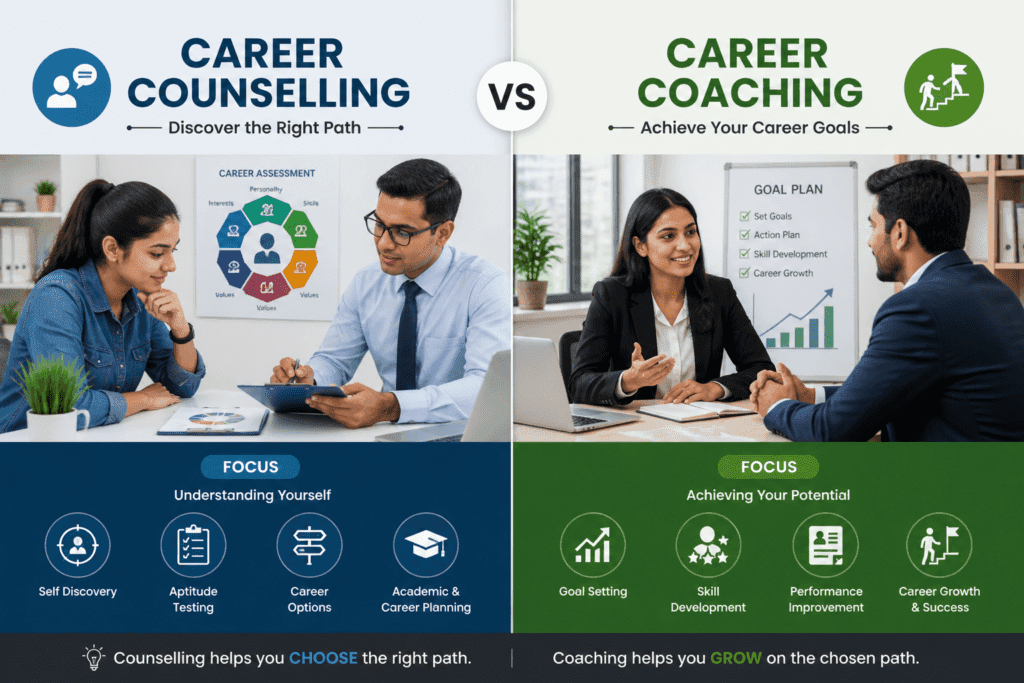
Career counselling is a structured process that helps individuals understand their strengths, interests, personality, and abilities to make informed career decisions.
It usually involves:
- Psychometric assessments
- Career aptitude tests
- One-on-one guidance sessions
- Career path recommendations
Career counselling is commonly used by students who are unsure about which stream or profession to choose.
Key Focus of Career Counselling
- Self-discovery
- Identifying suitable career options
- Academic and career planning
- Reducing confusion and anxiety
What Is Career Coaching?
Career coaching focuses on helping individuals achieve specific career goals. It is more action-oriented and future-focused compared to counselling.
Career coaching typically includes:
- Goal setting
- Skill development strategies
- Resume building
- Interview preparation
- Career transition guidance
It is often used by professionals who want to grow, switch careers, or improve performance.
Key Focus of Career Coaching
- Performance improvement
- Career growth strategies
- Accountability and motivation
- Achieving measurable outcomes
Major Differences Between Career Counselling and Career Coaching
1. Purpose
- Career Counselling: Helps you decide what career to choose
- Career Coaching: Helps you succeed in the career you have chosen
2. Target Audience
- Career Counselling: Students, freshers, and individuals at the decision-making stage
- Career Coaching: Working professionals or individuals looking for growth or change
3. Approach
- Career Counselling: Analytical and assessment-based
- Career Coaching: Action-driven and goal-oriented
4. Time Frame
- Career Counselling: Usually short-term
- Career Coaching: Often ongoing and long-term
5. Tools and Techniques
- Career Counselling: Psychometric tests, aptitude assessments
- Career Coaching: Mentoring, strategy building, performance tracking
When Should You Choose Career Counselling?
Career counselling is ideal if:
- You are unsure about your career path
- You are a student choosing subjects or streams
- You feel confused about your interests and strengths
- You want scientific assessment-based guidance
It provides clarity and direction at the beginning of your career journey.
When Should You Choose Career Coaching?
Career coaching is suitable if:
- You have already chosen a career path
- You want to grow or get promoted
- You are planning a career switch
- You need help with job preparation or skill development
It helps you move forward with confidence and strategy.
Can You Use Both Together?
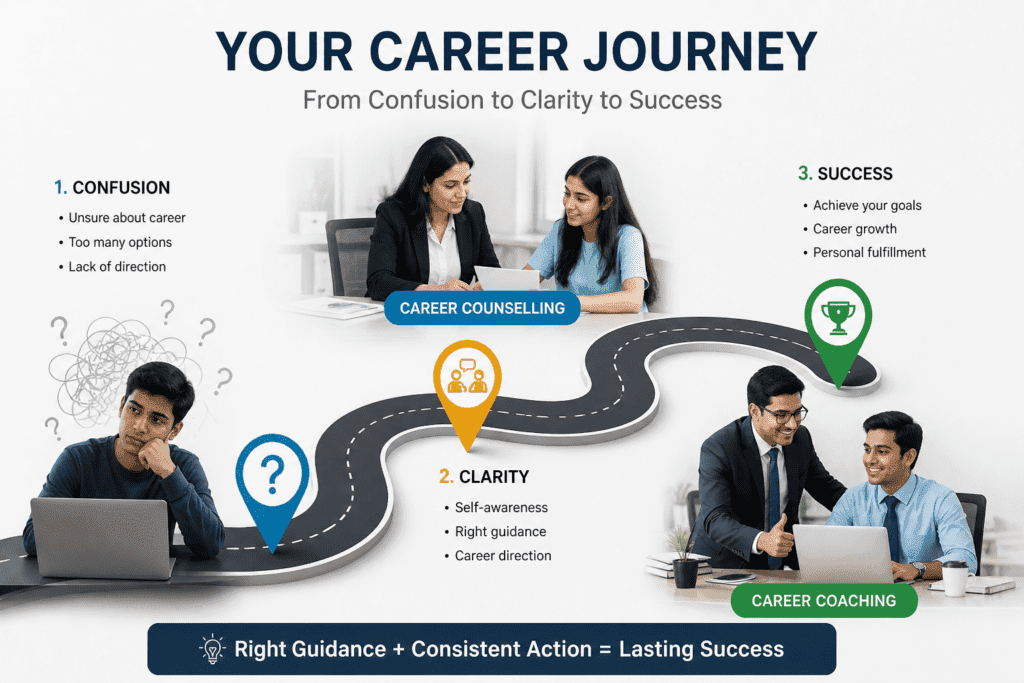
Yes, career counselling and career coaching can complement each other.
For example:
- Start with career counselling to identify the right path
- Follow it with career coaching to achieve success in that path
This combination ensures both clarity and execution.
Benefits of Career Counselling
- Provides clear direction
- Reduces confusion and stress
- Helps identify hidden strengths
- Supports better academic decisions
Benefits of Career Coaching
- Improves confidence and performance
- Provides structured career growth plans
- Enhances job readiness
- Encourages accountability
Common Misconceptions
1. They Are the Same
Many people assume counselling and coaching are interchangeable, but they serve different purposes.
2. Only Students Need Guidance
Both students and professionals can benefit from expert career support.
3. Career Decisions Are One-Time
In reality, careers evolve, and guidance may be needed at multiple stages.
Role of Parents and Mentors
Parents and mentors often influence career decisions. Understanding the difference between counselling and coaching helps them guide children or mentees more effectively.
They should:
- Encourage professional guidance when needed
- Avoid forcing decisions
- Support continuous growth and learning
Choosing the Right Professional
When selecting a career expert, consider:
- Qualifications and experience
- Tools and methods used
- Reviews or testimonials
- Approach (scientific vs practical)
The right guidance can significantly impact career success.
Future of Career Guidance
With rapid changes in technology and job markets, career guidance is becoming more important than ever. New-age careers, remote work, and global opportunities require individuals to stay adaptable and informed.
Both career counselling and coaching will continue to play a crucial role in helping individuals navigate these changes.