Why Early Career Guidance Makes All the Difference
In today’s rapidly changing world, students are exposed to countless career opportunities. From traditional professions to emerging industries, the options are wider than ever before. While this creates exciting possibilities, it also leads to confusion and uncertainty for many students and parents.
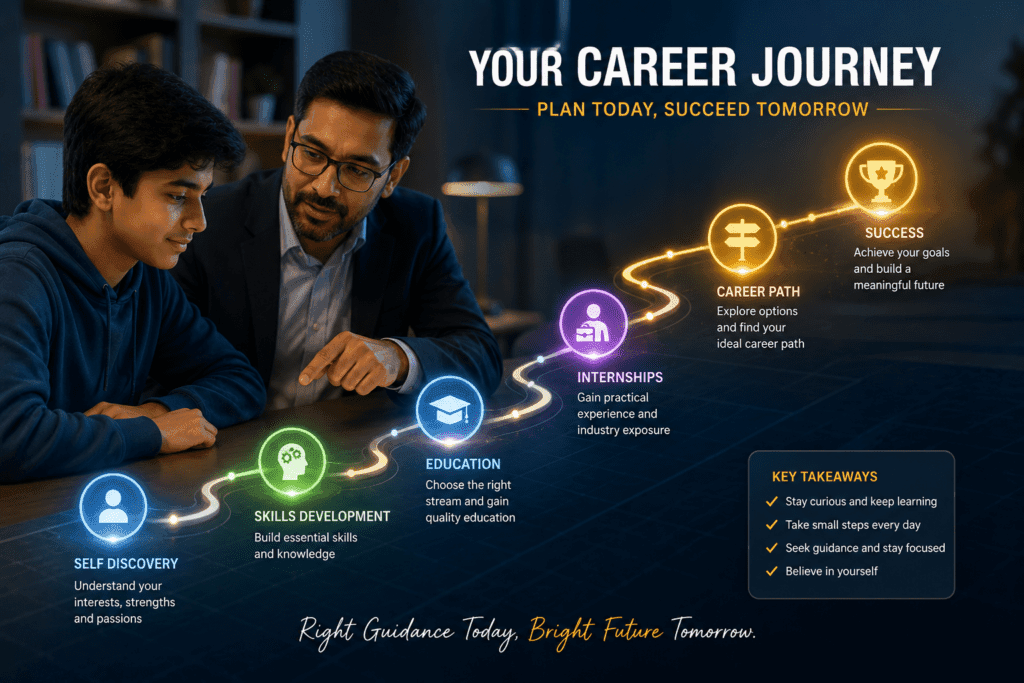
This is where early career guidance becomes extremely important. Career guidance at the right stage helps students understand their strengths, interests, personality, and future opportunities before making major academic or career decisions.
Instead of choosing careers based on pressure, trends, or assumptions, students can make informed decisions that align with their skills and long-term goals.
What Is Early Career Guidance?
Early career guidance is the process of helping students explore career paths, understand their abilities, and make informed educational and professional choices from a young age.
It involves:
- Understanding interests and strengths
- Identifying personality traits
- Exploring career opportunities
- Setting future goals
- Planning educational pathways
Career guidance is not about forcing students into a profession. It is about helping them discover what suits them best.
Why Early Career Guidance Matters
Many students make career decisions without enough awareness or exposure. This often leads to confusion, lack of motivation, or changing paths later.
Early guidance helps students:
- Gain clarity about future goals
- Avoid wrong career decisions
- Develop confidence in their choices
- Build relevant skills early
The earlier students understand themselves, the better prepared they become for future success.
Reduces Career Confusion
One of the biggest challenges students face is confusion caused by too many choices and external opinions.
Without guidance, students may:
- Follow friends blindly
- Choose careers based on social pressure
- Select streams without understanding them
Career guidance provides direction and structure, helping students make decisions based on self-awareness instead of confusion.

How to Choose the Right Career Path
Helps Identify Strengths and Interests
Every child has unique talents and abilities. Some may excel in creativity, while others perform well in analysis, communication, leadership, or problem-solving.
Early career guidance helps uncover:
- Natural strengths
- Learning styles
- Personality traits
- Career interests
Recognizing these factors early allows students to focus on areas where they can truly succeed.
Builds Confidence in Students
Students often experience anxiety when thinking about their future. Lack of clarity can create self-doubt and fear.
Career guidance helps students:
- Understand their potential
- Set realistic goals
- Develop decision-making confidence
- Feel more motivated about their future
Confidence grows when students know they are moving in the right direction.
Encourages Better Academic Planning
Career decisions influence subject choices, skill development, and higher education planning.
For example:
- A student interested in technology may focus on coding and mathematics
- A student interested in media may develop communication and creative skills
Early planning helps students align academics with career goals instead of making last-minute decisions.
Prepares Students for Future Job Markets
The modern job market is evolving rapidly due to technology and globalization. Many future careers did not exist a decade ago.
Career guidance introduces students to:
- Emerging industries
- Future job trends
- Digital skills
- Global career opportunities
This awareness helps students stay future-ready and adaptable.
Prevents Career Mismatches
Choosing the wrong career path can lead to dissatisfaction, stress, and lack of motivation.
Career mismatches often happen when students:
- Ignore their interests
- Choose careers only for salary or status
- Lack exposure to real opportunities
Early guidance reduces these risks by helping students make informed choices.
Role of Parents in Early Career Guidance
Parents strongly influence career decisions. Their support and understanding play a major role in shaping a child’s future.
Parents should:
- Encourage open discussions about careers
- Avoid comparing children with others
- Support exploration of different fields
- Focus on strengths instead of pressure
A supportive environment helps students discover their true potential.
Importance of Career Assessments
Career assessments and aptitude tests provide scientific insights into a student’s abilities and preferences.
These tools help identify:
- Personality type
- Career suitability
- Skill strengths
- Interest areas
Professional guidance combined with assessments improves decision-making accuracy.
Benefits of Early Career Guidance
1. Better Decision-Making
Students make informed and confident choices.
2. Reduced Stress
Clarity reduces anxiety about future careers.
3. Improved Motivation
Students become more focused when they understand their goals.
4. Stronger Skill Development
Early awareness allows students to build relevant skills sooner.
5. Long-Term Career Satisfaction
Choosing the right path increases fulfillment and success.
Personality Type and Career Choice
How Schools Can Support Career Guidance
Educational institutions also play an important role.
Schools can help by:
- Organizing career awareness sessions
- Conducting aptitude assessments
- Inviting industry professionals
- Providing internship opportunities
Practical exposure helps students understand real-world careers better.
Common Mistakes to Avoid
1. Delaying Career Discussions
Waiting until the final years of school can increase pressure and confusion.
2. Forcing Specific Careers
Students perform better when careers match their interests and strengths.
3. Ignoring New-Age Careers
Modern industries offer many exciting opportunities beyond traditional professions.
4. Focusing Only on Marks
Academic scores are important, but skills and mindset matter equally.
The Future of Career Guidance
Career guidance is becoming more essential as industries continue to evolve.
Future career planning will increasingly focus on:
- Skill-based learning
- Adaptability
- Digital literacy
- Emotional intelligence
Students who receive early guidance will be better prepared for future challenges and opportunities.
Blog by Hanumanthrao